
PPI 2026 – Polymer Process Innovation
MULTIMOLD was presented by with the abstract "Experimental Investigation and Numerical Simulation of Injec-tion Overmolding of Film-Based Electronic Components"
The 6th International Conference “PPI 2026 – Polymer Process Innovation” took place from September 1–4, 2026 at Montanuniversität Leoben, Austria. The event brought together researchers, engineers, and technologists from academia, research centers, and industry to discuss current challenges and opportunities in polymer engineering—spanning new material applications, data-driven development, sustainable processing, and innovative tooling.
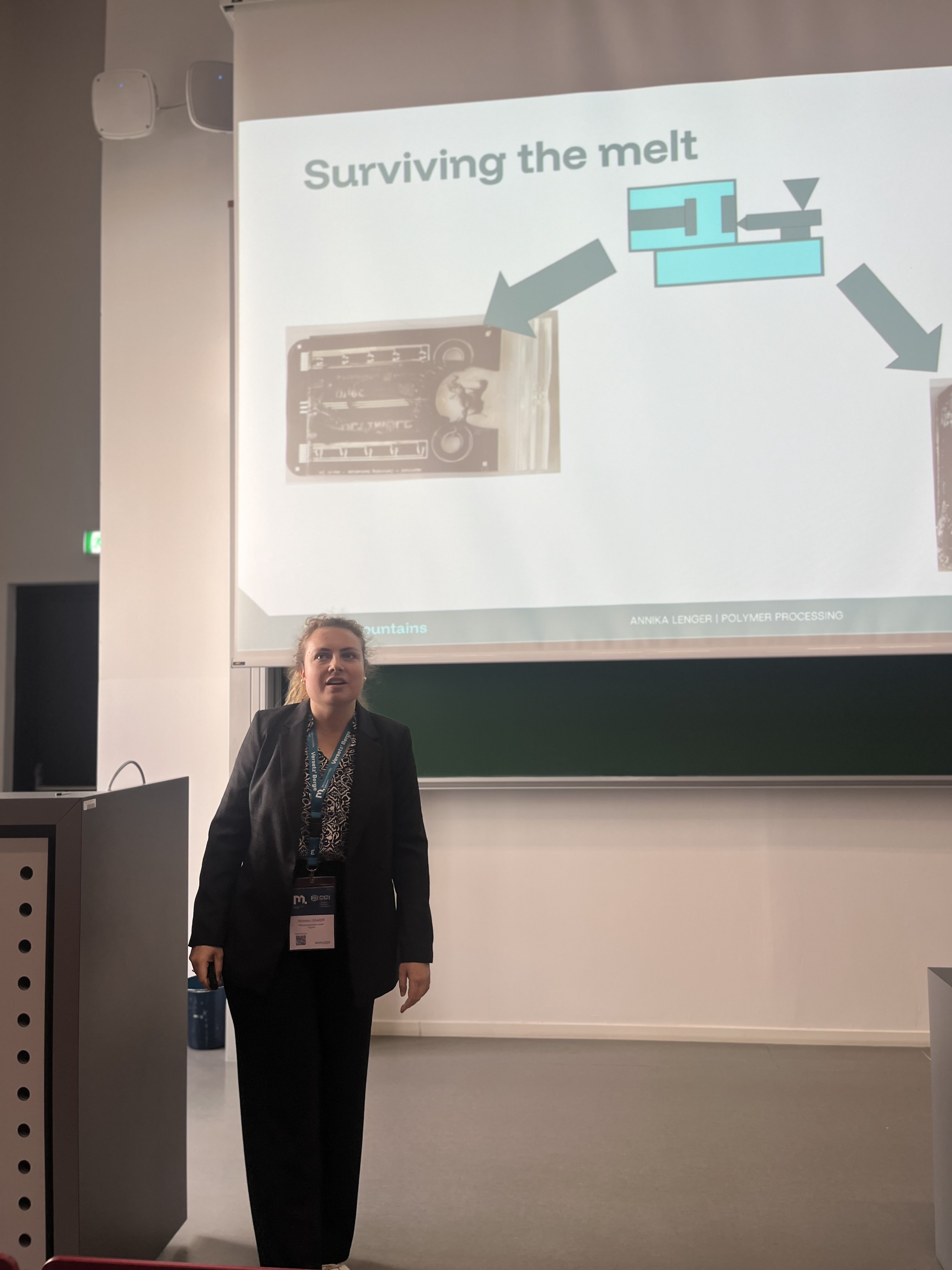
on 7 September, Annika Lenger, Montanuniversität Leoben, Institute of Polymer Processing represented the MULTIMOLD project presenting the abstract "Experimental Investigation and Numerical Simulation of Injection Overmolding of Film-Based Electronic Components" on injection overmolding for embedded films.
Injection overmolding is opening up exciting possibilities for combining electronics with plastic parts — think human-machine interfaces with integrated LEDs or sensors, molded directly into a single rigid, lightweight component. But getting there isn't simple. New research from Montanuniversität Leoben's Polymer Processing group sheds light on exactly what happens to these delicate film-based electronics when they meet the heat and pressure of overmolding.
The challenge: protecting fragile electronics during molding
In-mold electronics (IME) are built by printing conductive tracks and mounting components like LEDs or piezoelectric sensors onto polymer films, which are then thermoformed into a 3D shape. This film "stack" is placed in a mold and overmolded with plastic to lock everything into a durable, functional part.
The problem is that overmolding is a demanding process. The film stack and its embedded electronics face deformation, high temperatures, pressure, and shear forces any of which can distort the film or damage the components inside.
What the study looked at
Researchers Annika Lenger, David Zidar, and Thomas Lucyshyn investigated how processing conditions and component placement influence overmolding outcomes for IME parts. Their approach combined hands-on experimental trials with numerical injection molding simulation.
Film stacks made of a polycarbonate (PC) layer, a graphical layer, printed conductive tracks, and mounted components were overmolded with either PC or TPU. The team varied two key factors:
- Melt temperature during overmolding
- Position of electronic components relative to the gate
Resulting parts were inspected visually, and those observations were cross-checked against simulation results to connect local processing conditions with the actual behavior of the film and components.
Key findings
- Higher melt temperatures reduced film distortion: a somewhat counterintuitive but valuable insight for process design.
- Component position matters more than expected: even small shifts in a component's position relative to the gate led to noticeably different simulated thermal loads during overmolding.
Together, these results confirm that both process parameters and part layout have a strong, direct impact on the thermomechanical conditions electronics experience during molding.
Why it matters
This combined experimental-and-simulation approach gives manufacturers a practical framework for optimizing where components sit in the mold and how the process is run — helping reduce film deformation and thermal stress, and ultimately making in-mold electronics more reliable to produce at scale.
CHECK THE PRESENTATION
DOWNLOAD THE EXTENDED ABSTRACT HERE
Attend the Event
Join us for an insightful event on injection molding!
Get in Touch
For any inquiries related to the event, please reach out to us using the information below.