
Driving the Circular Transition: Understanding the EU’s New End-of-Life Vehicles Regulation (ELVR) and the MULTIMOLD Solution
The European automotive landscape is undergoing one of its most significant regulatory shifts in decades. With the adoption of Regulation (EU) 2026/1738 the new End-of-Life Vehicles Regulation (ELVR). The European Union is replacing previous directives with a single, binding framework entering into force in mid-2026. General application begins in September 2028, setting off a phased compliance roadmap that extends through 2036 and beyond.
.png)
For R&I divisions, engineering leads, and chemical centers collaborating with vehicle manufacturers, the ELVR transforms circular economy goals from voluntary targets into mandatory engineering requirements. The overarching goal is simple: keep raw materials inside Europe, eliminate toxic or non-recyclable assemblies, and force every new vehicle component to be designed for easy recovery.
Key Regulatory Pillars & Industry Implications
The new regulation establishes clear targets, constraints, and engineering priorities across four key design areas:
1.Recyclability and Recoverability Targets (From Sept 2028)
The Targets: New vehicle types must achieve MN ≥ 85% reusability/recyclability by mass and ≥ 95% recoverability by mass.
Engineering Implications: R&D teams must eliminate hard-to-separate multi-material assemblies (such as complex composites and permanent metal-plastic hybrids). Designs must favor mechanically separable joints (bolts, clips) over permanent structural adhesives where feasible, while optimizing polymer selection to support automated high-quality sorting (e.g., clear polymer families with minimal additive contamination).
2. Mandatory Recycled Plastic Content (~2032 to ~2036)
The Targets By ~2032 (+6 years), plastics in each new vehicle type must contain 15% post-consumer recycled content, scaling to 25% by ~2036 (+10 years). Crucially, at least 20% of that recycled plastic must come directly from closed-loop end-of-life vehicles (ELVs).
Constraints & Priorities: Only post-consumer recycled plastics qualify. Additionally, a 48-month mirror clause restricts non-EU recycled plastics unless processed under equivalent environmental standards. Engineering priorities focus on qualifying automotive-grade secondary polymers (PP, PE, ABS, PC/ABS, PA) and co-developing closed-loop recycling routes for interior trim, bumpers, and electronic housings.
3. Metals, Alloys, and Critical Raw Materials (Beyond 2032)
Upcoming Mandates: The European Commission will set minimum recycled content requirements for steel and aluminium, with potential extensions to magnesium and critical raw materials used in permanent magnets (Nd, Dy, Co, Ni).
Engineering Implications: Requirements focus on increasing the share of secondary metals, adapting material specifications to tolerate higher impurity levels from recycled scrap without sacrificing crash performance, and designing motor architectures that enable easy demagnetization and rare-earth recovery.
4. Design for Disassembly and Parts Reuse
The Mandates: Manufacturers must provide standardized instructions for safe access, removal, and replacement of components during both service life and end-of-life treatment.
Practical Actions: Standardizing fastening systems, eliminating permanent bonding for high-value or hazardous components (batteries, e-motors, airbags, electronics), and enabling fast, module-level removal for whole interior trim panels.
%201.png)
The Engineering Dilemma: Lightness vs. Recyclability
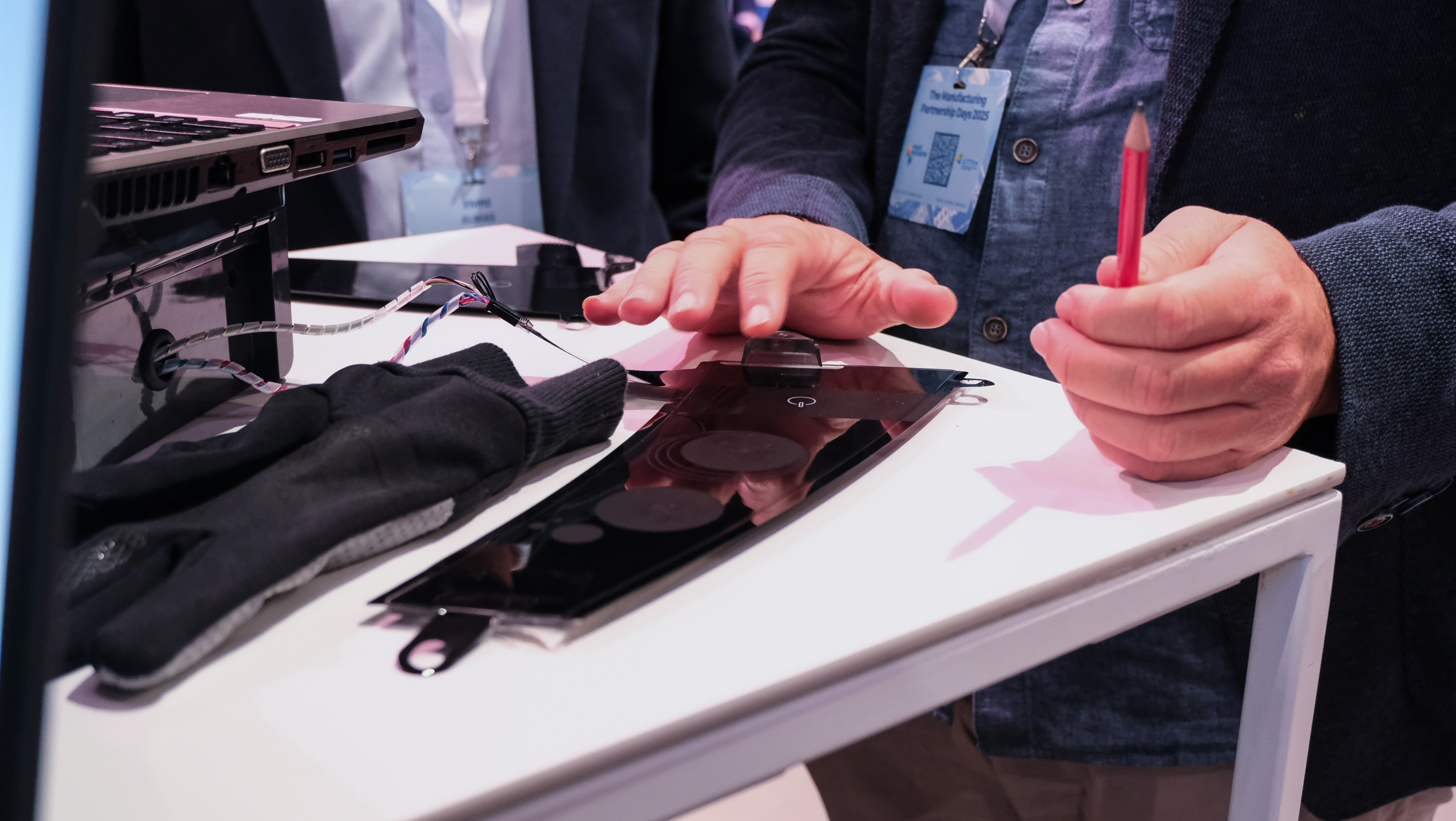
To reduce vehicle mass and emissions, modern automotive interiors rely heavily on lightweight materials, polymer composites, and integrated surface electronics (such as smart touch displays and human-machine interfaces).
However, conventional In-Mold Electronics (IME)—which combine printed functional circuitry, decorative graphics, and structural thermoplastics into a single overmolded component—have historically been an environmental bottleneck. Standard mechanical shredding pulverises these mixed materials into contaminated waste, destroying the polymer matrix and losing precious conductive metals like silver (Ag).
This creates a sharp dilemma for automotive engineering: How do you manufacture lightweight, functional interior components that comply with the EU's strict circular-by-design standards?
The MULTIMOLD Solution: Circular-by-Design Lightweight Automotive Electronics
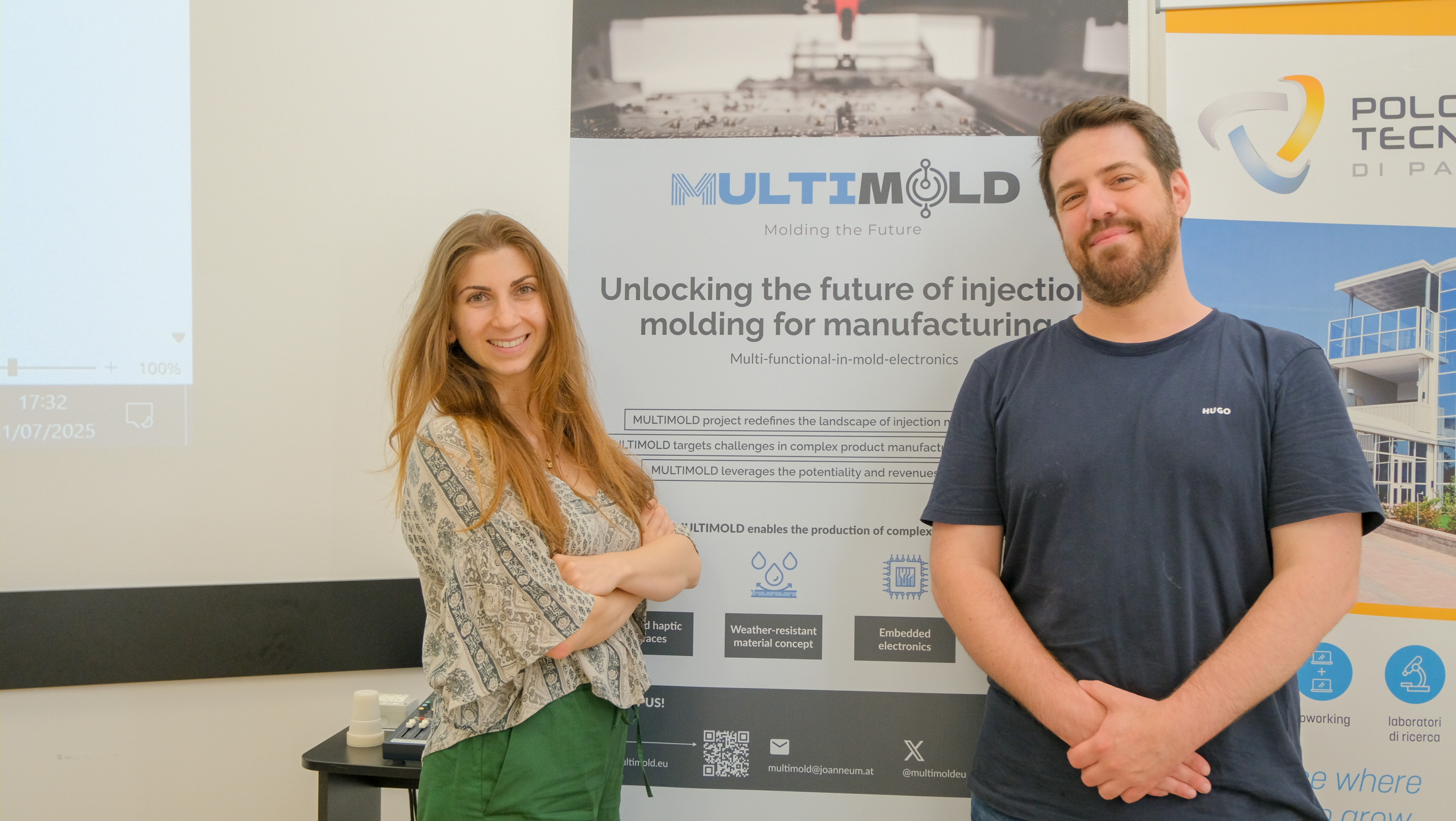
To solve this challenge, the Horizon Europe MULTIMOLD initiative is developing an integrated hardware and digital platform directly aligned with the new EU policy requirements.
MULTIMOLD addresses the ELVR mandates through three core innovations:
1. Easy Debonding via Selective Dissolution: Rather than relying on destructive mechanical shredding, MULTIMOLD employs a targeted solvent-based separation system. Structural polymers such as polycarbonate (PC) or thermoplastic polyurethane (TPU) are selectively dissolved in a controlled liquid phase. The conductive circuitry, overmolded flex PCBs, and surface-mount components remain intact in a distinct solid phase.
2. High-Purity Material Recovery: The dissolved polymer is filtered, dried, and extruded back into high-purity PC or TPU granulate. The recovered polymer exhibits a residual metal content of <0.5% and mechanical properties (Young's Modulus, Elongation at Break, 4-point flexural modulus) differing by ≤ 4% from pure virgin resin, making it directly suitable for closed-loop reuse. Simultaneously, the concentrated solid residue allows for efficient recovery of silver (Ag) and precious metals via standard metallurgy, significantly reducing reliance on primary raw materials.
3. Integrated Digital Product Passport (DPP) Architecture: To satisfy the ELVR's digital circularity passport mandates, MULTIMOLD is establishing a dedicated DPP framework. The passport structures complete material composition data, recyclability metrics, and chemical disassembly parameters directly into an interoperable digital record. By combining selective dissolution with digital traceability, MULTIMOLD provides automotive OEMs with a lightweight, functional, and fully compliant circular-by-design solution.
%202.png)
.png)
.jpg)


.jpg)


